The Mathematics of Beauty > Point
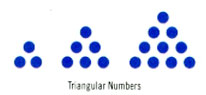
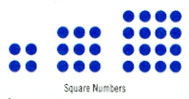
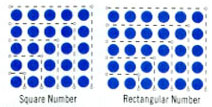
Pythagorean Figured NumbersThe Pythagoreans represented numbers by using patterns of points, possibly as a result of arranging pebbles into patterns. There were square numbers, rectangular numbers, and triangular numbers. Associated with figured numbers is the idea of the gnomon. Gnomon means "carpenter's square" in Greek. It is the name given to the upright stick on a sundial. The Pythagoreans used the word gnomon to refer to an L-shaped border appended to a figured number. For the Monad, the number points in each gnomon is odd and each successive figure formed is a square. The number of points in each gnomon added to the Dyad is even, and each successive figure is a rectangle or oblong. The Pythagoreans, in their Table of Opposites, associated odd and even with square and oblong. Each gnomon about the Monad forms a square, a stable form whose ratio of width to height never changes. By contrast, each gnomon about the Dyad forms a rectangle whose ratio of width to height changes each time. Therefore, the Pythagoreans associated limited with odd numbers and unlimited with even numbers. From these patterns, the Pythagoreans derived relationships between numbers that may have led to the discovery of geometrical theorems. For example, noting that as square number can be subdivided by a diagonal line into two triangular numbers, we can say that a square number is always he sum of two triangular numbers. For example, The observation that figured numbers follow certain patterns may have furthered the Pythagorean belief that the study of numbers would lead to the discovery of universal laws. |
|||
| source |